// 01 · AI GENERALIST YORK, UK · WORKING UK-WIDE

Build what your business couldn’t before.

I’m Colm, an AI generalist: engineer by training, twenty years in search. I’ll show you what AI could do for your business, often in places you hadn’t looked, then build it to spec, not near enough.

Colm Docherty
FIG. 01 · C. DOCHERTY

// STATUS

  • MENG, MECHANICAL ENGINEERING 1st
  • YEARS AS A MANUFACTURING DESIGN ENGINEER 2.5
  • YEARS IN SEARCH 20
  • YEARS RUNNING AN AGENCY 11
  • TAKING ON NEW PROJECTS Yes
  • AI VIDEO/
  • N8N AUTOMATION/
  • EMAIL TRIAGE/
  • VOICE AGENTS/
  • 3D INTERACTIVE/
  • DATA PIPELINES/
  • CUSTOM TOOLS/
  • BRAND SYSTEMS/
  • REPORTING ENGINES/
  • PROSPECTING SYSTEMS
// 02 · THE GAP

Everyone has
access to AI.
Very few
businesses know
what it could
do for them.

Over half of small businesses don’t use AI tools at all. Many that do use them to tidy emails and summarise meetings. A few build something, and it breaks or never gets finished. Nobody has shown them what’s possible.

Knowing AI matters isn’t the same as knowing where to start.

FIG. 02 · UK SMALL BUSINESSES AND AI, 2026
Use AI tools 47%
Very confident using it 19%
THE CONFIDENCE GAP: 28 PTS
Use it only for admin 33%
Can’t see a clear use 39%

Source: Simply Business, 2026 SME Insights Report. 1,842 UK small business owners surveyed 30 Jul to 7 Aug 2026.

// 03 · WHERE THE VALUE IS

AI isn’t one tool. It’s hundreds, and none of them knows your business.

Each one is good at something different, and each has to be set up with the right context before it can do real work for your business: what you sell, how you sound and what good looks like. Plenty of people try one, get a disappointing result and write AI off. The tool wasn’t the problem. The set-up was. That still takes judgement, and it’s where the value has moved.

AI DOES IN SECONDSSTILL TAKES JUDGEMENT
Writes copy and codeChoosing the right tool for each job
Makes images, video and audioSetting it up with the context of your business
Crunches the numbersDesigning a process people will actually use
Builds a first versionTurning “it works” into “it runs every day”
Answers with confidenceChecking it, and being accountable when the numbers matter

“It works” is a demo.
“It runs the business”
is a system.

FIG. 03 · T-BEAM · BREADTH AND DEPTH
DEPTH · CARRIES THE LOAD BREADTH
  • WRITING
  • IMAGES
  • VIDEO
  • AUDIO
  • DATA
  • AUTOMATION
4 · HOLDS UP Tested so it keeps working, and you can trust what it produces.
3 · BUILT FOR YOUR PEOPLE Designed around whoever uses it every day.
2 · JOINED UP Builds on the software you have where it works, adds new tools only where it doesn’t, and knows which is which.
1 · KNOWS YOUR BUSINESS Set up around how you work, not how the tool works.
MATERIAL MECHANICAL ENGINEERING,
20 YEARS OF SEARCH
BREADTH
  • WRITING
  • IMAGES
  • VIDEO
  • AUDIO
  • DATA
  • AUTOMATION
DEPTH · CARRIES THE LOAD
  1. 4 HOLDS UP Tested so it keeps working, and you can trust what it produces.
  2. 3 BUILT FOR YOUR PEOPLE Designed around whoever uses it every day.
  3. 2 JOINED UP Builds on the software you have where it works, adds new tools only where it doesn’t, and knows which is which.
  4. 1 KNOWS YOUR BUSINESS Set up around how you work, not how the tool works.
MATERIAL MECHANICAL ENGINEERING,
20 YEARS OF SEARCH

One engineer who sees the whole business.

That’s what an AI generalist is. Broad enough to see how the pieces connect: which tool fits each job, and how they work together. Deep enough to build them properly, into a system that fits your business and holds up every day. Every system in the case studies below was built this way.

// 04 · CASE STUDIES

Systems I’ve built with AI, and what they changed.

Each one started as a real problem in my own agency, and ended as a working system.

CASE STUDY 01 Sales and growth systems

Built on referrals. Needed a pipeline.

A business that had only ever grown on inbound leads needed a way to find new customers itself. The brief was 100 complete prospect records. The system delivered 1,302, from live sources: every company checked against Companies House and its own website, a named director on every record. And it’s a tool, not a list: always on, ready to use, and already validated across six industries.

Fits any business that wants to go and find customers.

1,302 companies verified, from a brief of 100
CASE STUDY 02 Reports and pitches

Many authors. One standard.

Pitches and reports were built slide by slide by different people, and it showed: inconsistent formatting, off-brand slides, typos, and too long to assemble and sign off. Now everyone contributes their own slides and the system merges them into one standardised, on-brand deck in seconds. Raw data becomes finished charts, tables and timelines without anyone designing them, and spelling and grammar are corrected as it goes, so every deck reads as if one person made it, typo-free.

Fits any business where several people build the same document.

About 50% less pitch preparation; up to 80% on renewal decks (Colm’s estimates)
THE POST BUILDER AS A JIG
CASE STUDY 03 Brand and content systems

A jig, not a toolbox.

A professional designer created the branding for a business’s LinkedIn posts. Then it passed to the people responsible for creating and publishing them, none of them designers, and each small choice drifted the posts further off brand: a colour that looked right to them, a smaller font to fit more words, and the next post copying the last. So I built a LinkedIn post builder to the designer’s spec, with every off-brand choice taken away. Like a jig in a workshop, it keeps each post true to the brand vision, so each one looks professionally designed and clears sign-off faster.

Fits any business whose brand lives in other people’s hands.

113% engagement rate up, vs 12-month average
CASE STUDY 04 Operations and tools

Your tools, on your platform.

Most small businesses log into a different platform for every job, jumping from screen to screen and forgetting which login belongs where. So I built a private portal for a business: one login to custom versions of the tools it relies on, wired into the services behind them. The tools are the business’s own, not rented.

Fits any business running on a pile of logins.

7 tools live on one login
FEATURE · CITATION CITY

Big data, made press-ready.

01 · THE DATA

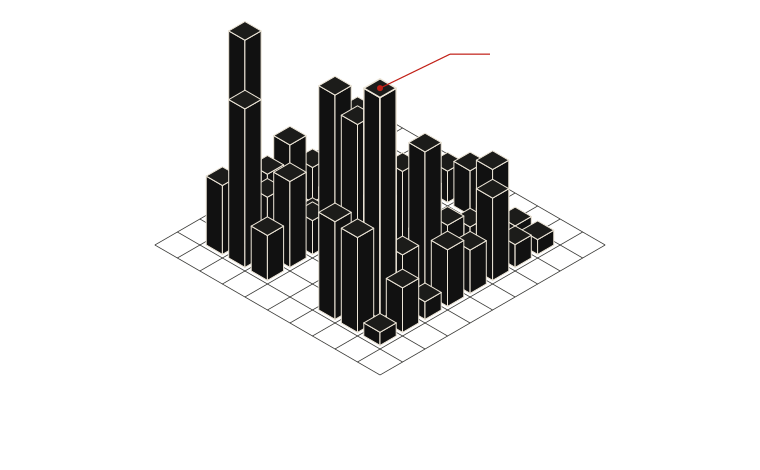
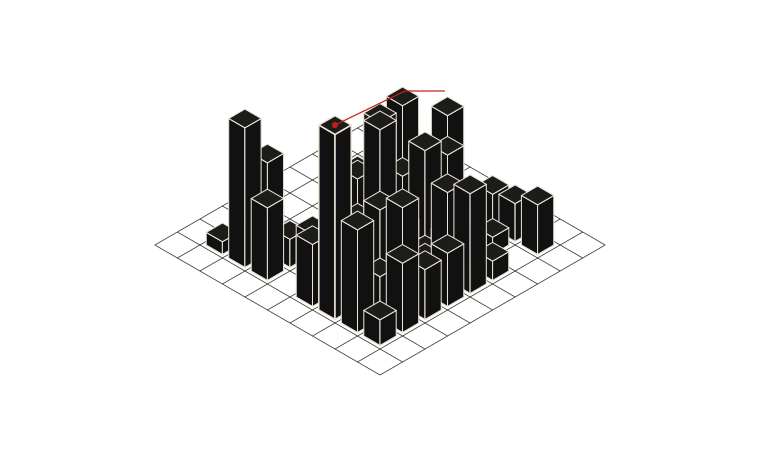
A script put the questions to ChatGPT, Gemini and Claude directly, 927 in all, with nobody typing them in one at a time. AI then analysed every answer in minutes and pulled out the insights and the story.

02 · THE POLISH

Then I turned those findings into an interactive 3D city: the kind of finished piece a journalist can run with.

  • ChatGPT
  • Gemini
  • Claude

BUILT WITH

  • Claude
  • ChatGPT
  • Gemini
  • n8n
  • Python
  • Three.js
  • Blender
  • Remotion
  • Higgsfield
// 06 · HOW I WORK

How a project runs.

The same four steps, every time. Fixed price, in phases you can stop after.

  1. STEP 01 / 04

    Scope

    You know the problem. I pin it down properly: where it starts, what it costs and what fixing it should change.

    • CAUSE
    • COST
    • BRIEF
  2. STEP 02 / 04

    Plan

    I find out what your people actually need from it, and agree what gets built before anything is.

    • NEEDS
    • CHECKS
    • SIGN-OFF
  3. STEP 03 / 04

    Build

    I choose the tools and connect them into one system: the software you already use, automation and AI where it earns its place. I run the project end to end, so nothing falls through the gaps.

    • TOOLS
    • CONNECTIONS
    • DELIVERY
  4. STEP 04 / 04

    Prove

    Measured before and after. You own the record.

    • BASELINE
    • MEASURE
    • RECORD
// 07 · WHERE TO START

Not sure where to start? Start with the problem.

Pick the issue that’s costing you the most time, money or customers, and see what I’d build and where I’ve built it before.

  1. PRB-01 REAL PROJECT

    Finding new customers

    The problem

    Most of your work comes through referrals, and you can’t control when the next one arrives.

    What I’d build

    A prospecting system that finds companies that fit, checks each one and names the person to contact.

  2. PRB-02 REAL PROJECT

    Documents several people build

    The problem

    Every proposal and report looks a little different, and pulling one together takes longer than writing it.

    What I’d build

    A builder that merges everyone’s contributions into one finished, on-brand document.

  3. PRB-03 REAL PROJECT

    A brand that drifts

    The problem

    Your posts and documents no longer look like the brand you paid for.

    What I’d build

    A builder set to your brand’s spec, so everything it makes stays on brand.

  4. PRB-04 REAL PROJECT

    Too many tools and logins

    The problem

    Too much of the day goes on moving between screens and hunting for passwords.

    What I’d build

    One private platform, with the tools you rely on behind a single login.

  5. PRB-05 REAL PROJECT

    Data you can’t use

    The problem

    You know there’s a story in your data, but nobody has time to find it.

    What I’d build

    A system that collects it, analyses it and turns it into findings people can use.

  6. PRB-06 REAL PROJECT

    Admin that fills the week

    The problem

    Inboxes, notes and copying information between systems take time away from the work that matters.

    What I’d build

    Automations that sort the inbox and turn meetings into actions, in the background.

// 08 · ABOUT · COLM DOCHERTY

Twenty years engineering search. Now engineering AI output.

I trained as a mechanical engineer: a first-class master’s from Sheffield, then two and a half years designing machinery for medical, pharmaceutical and plastics production.

Then I moved into search. Ranking on Google is an engineering problem: work out what the algorithm rewards, test cause and effect, prove it with evidence. People I’ve worked with put my results down to the engineering.

Search has always moved with the technology behind it, so I’ve spent twenty years learning new systems as they arrive. AI is the biggest of them, and the closest: search and AI both come down to how a machine decides what’s worth showing people. Working with AI since 2023 was a natural next step. I’ve run my own agency since 2015, and built the AI systems that keep it consistent, efficient and ahead. They’re the work on this page. So is the page itself. If you’ve liked what you’ve seen, here’s the thing: every render, video and animation on it was made with AI. None of it is the AI slop you’ve scrolled past, and that’s not down to the tool. It’s down to how it was briefed, constrained and checked, not one prompt and hope.

The same habits apply to your business. One engineer, accountable for the whole job.

FIG. 08 · DIMENSION CHAIN · CAREER TO DATE
2007 SMARTPHONES 2011 VOICE SEARCH 2015 OWN AGENCY 2015 MOBILE OVERTAKES DESKTOP 2022 AI ANSWERS ARRIVE
Engineer 1999 TO 2006 Built to spec
Search 2006 TO NOW Cause, effect, evidence
AI 2023 TO NOW Same method, new material
NOW 15 NOV 2026
2007 SMARTPHONES 2011 VOICE SEARCH 2015 OWN AGENCY 2015 MOBILE OVERTAKES DESKTOP 2022 AI ANSWERS ARRIVE
Engineer 1999 TO 2006 Built to spec
Search 2006 TO NOW Cause, effect, evidence
AI 2023 TO NOW Same method, new material
NOW 15 NOV 2026
  1. 2007 01 Apple launches the iPhone. Search moves into people’s pockets.
  2. 2011 02 Siri launches on the iPhone 4S. People start asking out loud.
  3. 2015 · AGENCY 03 I start my own agency.
  4. 2015 · MOBILE 04 Google says more searches now happen on mobile than desktop, in 10 countries.
  5. 2022 05 ChatGPT launches. Answers start coming from AI.
// 10 · QUESTIONS

Frequently asked questions.

Q01–Q11

Q01

What is an AI generalist?

Someone who takes a problem in your business and turns it into a working system, using whichever AI tools fit. A specialist goes deep on one tool or one kind of work. A generalist sees how they fit together across the business. You get one person from the problem to the finished system, not a different specialist for each part, and not advice that someone else has to build.

Q02

Is AI relevant to a business like mine?

Probably, though not always where you’d expect. Every business has work that eats time: finding customers, building documents, admin, data nobody has time to use. I start with the problem, not the technology, and if AI isn’t the right fix, I’ll say so.

Q03

Couldn’t I just do this myself with AI?

Some of it, and it’s worth trying. Anyone can use the tools; getting work you’d put your name to is the hard part, which is why so much AI output looks the same. Everything on this page was made with AI. What made it look like this is the part AI can’t do for itself: choosing the right tool for each job, setting it up with the right context, constraining it, and knowing what good looks like before it comes back. That’s what I bring to your business.

Q04

What happens on the first call?

You tell me what’s slowing your business down, or where you suspect AI could help but don’t know where to start. I ask questions, and tell you honestly what I think is possible, whether AI is the right answer at all, and whether I’m the right person to build it. Let’s have a no-obligation conversation.

Q05

Will this replace my staff?

No. Every project adds something the business couldn’t do before: more output, better quality, new capability.

Q06

How is it priced?

A fixed price per project, agreed before work starts, in phases you can stop after. No hourly billing. If a build needs tools with a running cost, you’ll know before we start.

Q07

How much of my time will it take?

Most of it goes in at the start: the first call, then time with the people who’ll use the system, so I understand the problem and what they need. After that, you sign off each phase.

Q08

How will I know it’s worked?

Before I build anything, we agree what fixing the problem should change, and I measure where it stands now. I measure again after, so you see the difference in your own numbers, and you own the record.

Q09

Doesn’t AI make things up?

It can, and so can people. AI fills gaps with a confident guess, and a single question with no background leaves plenty of them. So I set it up first: the documents and facts it should work from, written instructions on how your business works, and permission to say when it doesn’t know. Then I build in checks to suit the job, and they stay in place after I hand it over. I set the rules and make the judgement calls; AI does the heavy lifting under those rules.

Q10

Is my data safe?

Your data stays yours. Where an AI service offers to train on your data, that’s switched off. Passwords, keys and banking details never go into an AI system or a project file.

Q11

Who owns what you build?

You do, once each phase is paid. It’s set up in your name, and you get the documentation to run it without me.